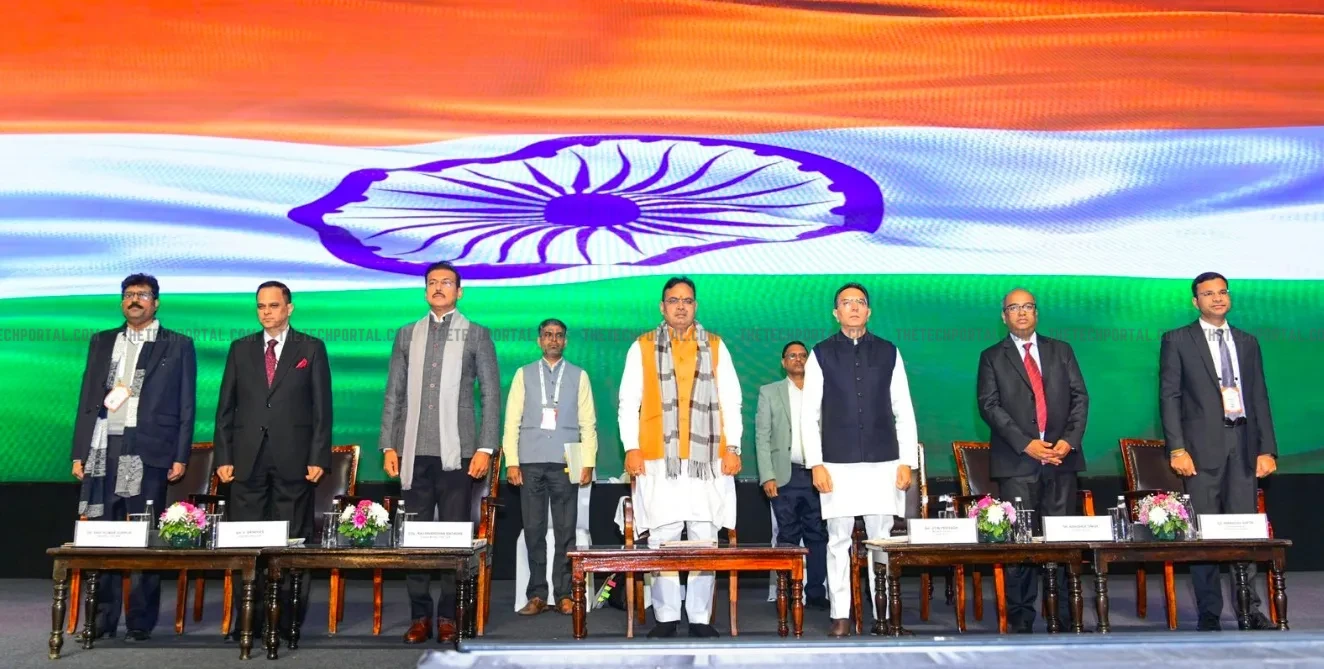

The TiE Global Summit 2026 has emerged as a defining moment for India’s rapidly evolving startup landscape, clearly shifting national and global attention toward the country’s Tier-2 and Tier-3 cities. Held from January 4 to 6 at the Jaipur Exhibition and Convention Centre, the summit marked the 10th edition of TiE’s flagship global event and, for the first time in its global history, was hosted in a non-metro Indian city. The choice of Jaipur was widely seen as a deliberate statement on the decentralisation of entrepreneurship in India and the growing importance of regional innovation hubs.
The scale and diversity of participation highlighted the summit’s global stature. More than 10,000 delegates from over 50 countries attended the event, including over 1,000 TiE Charter Members, founders, venture capitalists, angel investors, corporate leaders, and policymakers. Over 1,200 companies were represented, with founders ranging from early-stage startups to unicorn and soonicorn leaders. A notable feature of this edition was the strong presence of entrepreneurs from cities like Jaipur, Indore, Kochi, Coimbatore, Bhubaneswar, and Chandigarh, reflecting the expanding footprint of the country’s startup ecosystem beyond traditional metro centres. This becomes even more significant as, according to figures shared during the summit, around 50% of the country’s total of nearly 200,000 registered startups, now originate from non-metro regions.
Another major defining aspect of the summit was the active participation of state governments, which used the platform to announce policy measures and funding initiatives to encourage startups in non-metro regions. The Rajasthan government unveiled a ₹100-crore Fund of Funds designed to support early-stage startups through SEBI-registered Alternative Investment Funds. The state committed an initial contribution of ₹33 crore, with the structure intended to attract significant private capital and multiply the overall funding pool.
In parallel, the state also announced its Artificial Intelligence and Machine Learning policy, positioning Rajasthan as one of the early adopters of structured AI governance among India’s non-metro states. The policy aims to promote the use of AI across sectors like governance, healthcare, agriculture, and digital services, while also supporting startups working on applied and vernacular AI solutions. Notably, these announcements were closely linked to the summit’s broader emphasis on deep technology and next-generation innovation.
Several sessions at the summit also stressed the growing importance of small regional hubs as the country’s next growth engines. Addressing one such discussion, Madhya Pradesh Chief Minister Mohan Yadav said that cities like Indore and Jaipur are increasingly attracting investments across IT services, global capability centres, data centres, and semiconductor-linked supply chains. He pointed out that “talent availability, lower costs, and better quality of life are reversing migration trends that once favoured only big metros.”
Even investor sentiment at the summit reflected similar optimism. During panels on long-term capital allocation, including the session ‘Capital for the Long Term: Investing in India’s Growth Story’, discussions held in the presence of Convener Mahavir Pratap Sharma centred on how India’s investment priorities are gradually shifting beyond metro markets. Venture capitalists and angel investors participating in these conversations repeatedly highlighted that startups from non-metro regions tend to be more capital-efficient and focused on sustainable growth rather than aggressive valuation chasing.
Beyond funding and policy, the summit also focused on strengthening the startup ecosystem. More than 114 innovation stalls and state pavilions showcased products from Tier-2 and Tier-3 cities. At the same time, initiatives like the i-Start programme offered year-long mentorship and market access, with expected investment commitments of over ₹200 crore for Rajasthan-based startups alone.
The Tech Portal is published by Blue Box Media Private Limited. Our investors have no influence over our reporting. Read our full Ownership and Funding Disclosure →

Ashutosh is a Senior Writer at The Tech Portal, largely reporting on new tech, and intersection of technology and business. Ashutosh’s career spans across nearly a decade of technology writing across multiple platforms and languages.