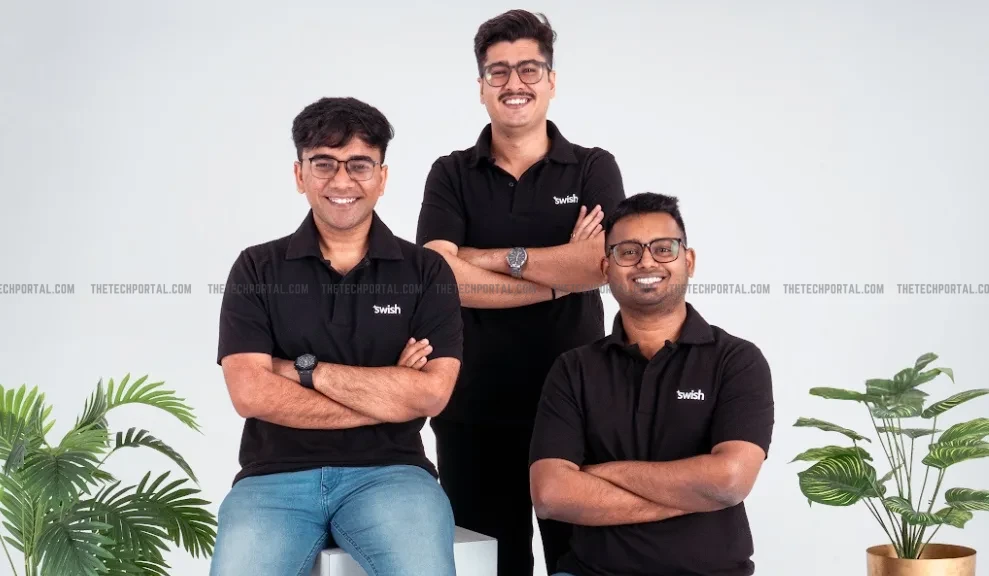
Bengaluru‑based quick‑food delivery startup Swish has raised $38 million in a fresh Series B funding round. The round was led by Hara Global and Bain Capital Ventures, with participation from existing investor Accel India as well as venture debt partners Alteria Capital and Stride Ventures. The funding raises the startup’s valuation to around $140 million post-money, more than 2.4 times its previous value.
This latest infusion of capital brings Swish’s total funding to around $54 million, including its earlier seed and Series A rounds. About a year ago, Swish raised $14 million in a Series A round led by Hara Global, with support from Accel and several angel investors. Before that, the company had raised $2 million in a seed round from Accel in November 2024.

Meanwhile, the newly raised funds are aimed at expanding into new cities, including Delhi‑NCR and Mumbai, while strengthening supply chain infrastructure, enhancing kitchen automation, and increasing staff in operations, product, and technology functions. The funding will also be used to improve unit economics and ensure scalability as Swish grows beyond its initial footprint.
Founded in 2024 by Aniket Shah, Ujjwal Sukheja, and Saran S., Swish operates a 10-minute food delivery model using a network of cloud kitchens strategically located near areas with high customer demand. By focusing on a limited delivery radius, the startup aims to ensure faster turnaround times while maintaining meal quality and reliability. Swish’s daily order volume has reportedly increased fourfold in just four months, from about 5,000 to 20,000 per day.
Swish competes in the ultra-fast food delivery segment along with major players like Zomato, Swiggy, and Zepto. But the space has seen several setbacks due to operational challenges. For example, Swiggy shut down its 10-15 minute delivery app Snacc within a year. Earlier, rival Zomato experimented with rapid formats like Quick and Everyday but discontinued them in 2025 after encountering weak demand and profitability concerns. Similarly, Zepto scaled back parts of its Zepto Cafe expansion amid operational challenges and rising costs. Even other players like Ola have also put their Ola Foods delivery service on hold after a relaunch.
However, in contrast, Swish’s hyperlocal, vertically integrated approach – meaning owning kitchens, controlling delivery, and focusing on dense demand clusters – appears to be delivering stronger results. Even the company’s success shows the potential for a more efficient, localized model in India’s ultra-fast food delivery segment, where high speed, frequency, and operational precision are critical.
The Tech Portal is published by Blue Box Media Private Limited. Our investors have no influence over our reporting. Read our full Ownership and Funding Disclosure →