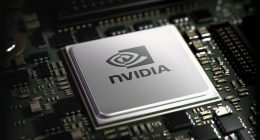

NVIDIA has announced a major partnership with Thinking Machines Lab, the AI startup founded by former OpenAI CTO Mira Murati, which includes a significant investment and a large multi-year computing agreement. As part of the deal, Nvidia will provide the company with AI infrastructure built on its next-gen Vera Rubin architecture and confirmed plans to deploy up to 1GW of computing capacity to train future AI models. The agreement could translate into tens of thousands of next-generation GPUs across large data-center clusters, with infrastructure spending potentially reaching tens of billions of dollars over time.
“AI is the most powerful knowledge discovery instrument in human history. And Thinking Machines has brought together a world-class team to advance the frontier of AI,” Jensen Huang, CEO of NVIDIA, noted.
The scale of the planned computing deployment places the partnership among the largest infrastructure commitments ever made to a newly founded artificial-intelligence company. A 1GW AI computing cluster represents a massive level of power consumption and processing capability. In energy terms, a gigawatt of continuous power is comparable to the electricity demand of a medium-sized city or around 700,000 to 1 million households, depending on regional consumption patterns.
At the core of the project is Nvidia’s Vera Rubin architecture, the company’s next major generation of AI computing technology expected to follow the Hopper and Blackwell GPU platforms that currently dominate the AI training market. The Vera Rubin platform combines high-performance Rubin GPUs with the new Vera CPU designed for data processing and system coordination in large AI workloads. It also uses NVLink technology that allows thousands of GPUs to communicate with very low latency and extremely high data bandwidth for large-scale model training. This architecture is intended to enable massive GPU clusters that behave like a single supercomputer.
Notably, Thinking Machines Lab was founded by Mira Murati in early 2025 after her departure from OpenAI. Despite being a relatively young organization, the company has attracted significant financial backing and top research talent. Early funding rounds reportedly raised around $2 billion, placing its valuation at almost $10-12 billion within its first year of operations. The startup has also assembled a research team that includes engineers and scientists recruited from leading technology firms and AI labs. Among its early senior hires was John Schulman, a co-founder of OpenAI and a key contributor to the development of learning techniques used in large language models.
It is also worth noting that this is not the first time Nvidia has placed a bet on Thinking Machines Lab. The semiconductor giant had already participated in the startup’s early funding round. The move becomes even more significant in the broader context of Nvidia’s growing involvement in the AI sector, as the company also recently invested around $30 billion in OpenAI as part of the ChatGPT maker’s massive $110 billion funding round.
The Tech Portal is published by Blue Box Media Private Limited. Our investors have no influence over our reporting. Read our full Ownership and Funding Disclosure →

Ashutosh is a Senior Writer at The Tech Portal, largely reporting on new tech, and intersection of technology and business. Ashutosh’s career spans across nearly a decade of technology writing across multiple platforms and languages.