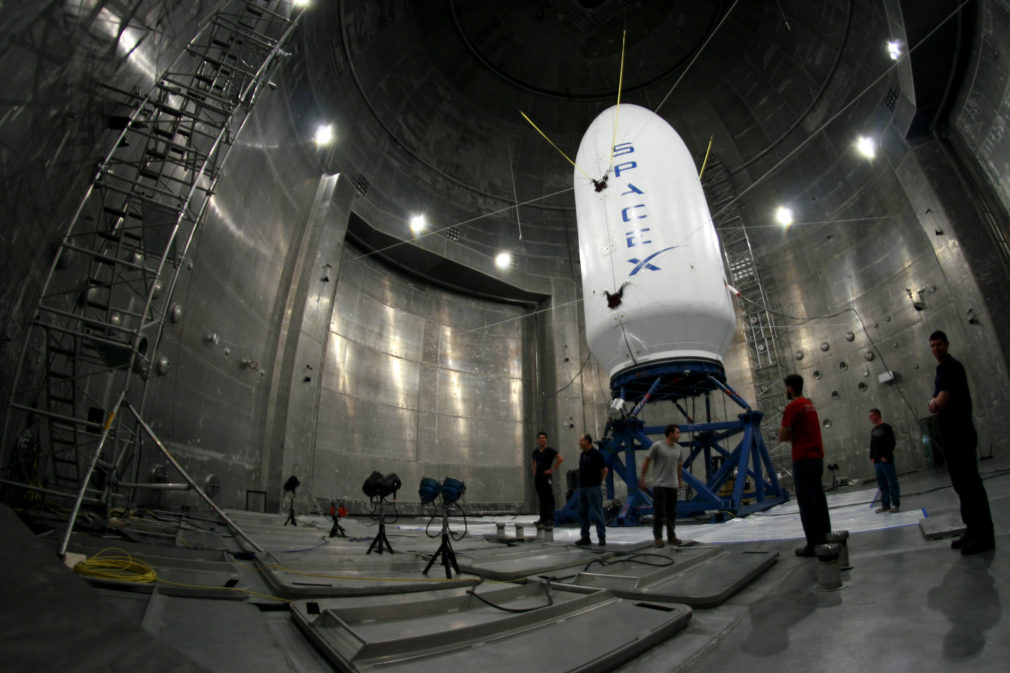
SpaceX has reportedly filed for an initial public offering in the US through a confidential route, meaning it has not yet disclosed detailed financials publicly. The Elon Musk-led company is expected to target a valuation of up to about $1.75 trillion and could raise around $75 billion, making it one of the biggest IPOs ever, reports Bloomberg. The development becomes even more significant as SpaceX is not just a space exploration company, with its Starlink satellite internet business expanding globally and its recent merger with xAI taking the combined entity’s valuation to around $1.25 trillion.
The confidential filing is the first formal step in SpaceX’s IPO process, allowing the company to engage with regulators and institutional investors while keeping sensitive financial and operational details private. This approach is commonly used by large firms to refine their listing plans before publicly releasing a full prospectus. If the process proceeds without major hurdles, the company could move toward a public debut as early as mid-2026.
According to the report, SpaceX has set up a large global banking group for its upcoming IPO, including major firms like Bank of America, Citigroup, Goldman Sachs, JPMorgan Chase, and Morgan Stanley. International banks are also involved in handling regional demand, with different institutions managing orders across the UK, Europe, Canada, Asia, and Australia. The company is also expected to use a dual-class share structure, giving insiders like Elon Musk greater voting control after listing. Reports also suggest that up to around 30% of the IPO could be reserved for retail investors.
A major driver of investor interest is SpaceX’s strong and diversified revenue base. The company generated an estimated $15-16 billion in revenue in 2025, with a significant share coming from its Starlink division, which has grown into the world’s largest low-Earth orbit satellite internet network. At the same time, SpaceX’s Falcon 9 rocket program, known for its reusability, has dramatically reduced the cost of accessing space and enabled the company to dominate the global commercial launch market. Regular missions for organizations like NASA, along with private and government clients, ensure a consistent flow of contracts. In parallel, the company’s Starship program – designed as a fully reusable heavy-lift rocket for Moon and Mars missions – remains central to its long-term vision, despite ongoing technical challenges. Recent estimates suggest that the company’s rocket launch program and Starlink satellite business could generate around $18-20 billion in revenue in 2026.
The integration with xAI adds another dimension to the company’s strategy. The potential to deploy AI-driven services through a global satellite network could transform industries ranging from telecommunications to defense and cloud computing. This strategy is further strengthened by Elon Musk’s efforts to align multiple ventures – including Tesla, SpaceX, and xAI – under a semiconductor initiative reportedly called ‘Terafab’, aimed at building advanced chip manufacturing capacity to support large-scale AI workloads. Meanwhile, in terms of revenue, xAI is expected to contribute less than $1 billion this year.
The Tech Portal is published by Blue Box Media Private Limited. Our investors have no influence over our reporting. Read our full Ownership and Funding Disclosure →

Ashutosh is a Senior Writer at The Tech Portal, largely reporting on new tech, and intersection of technology and business. Ashutosh’s career spans across nearly a decade of technology writing across multiple platforms and languages.