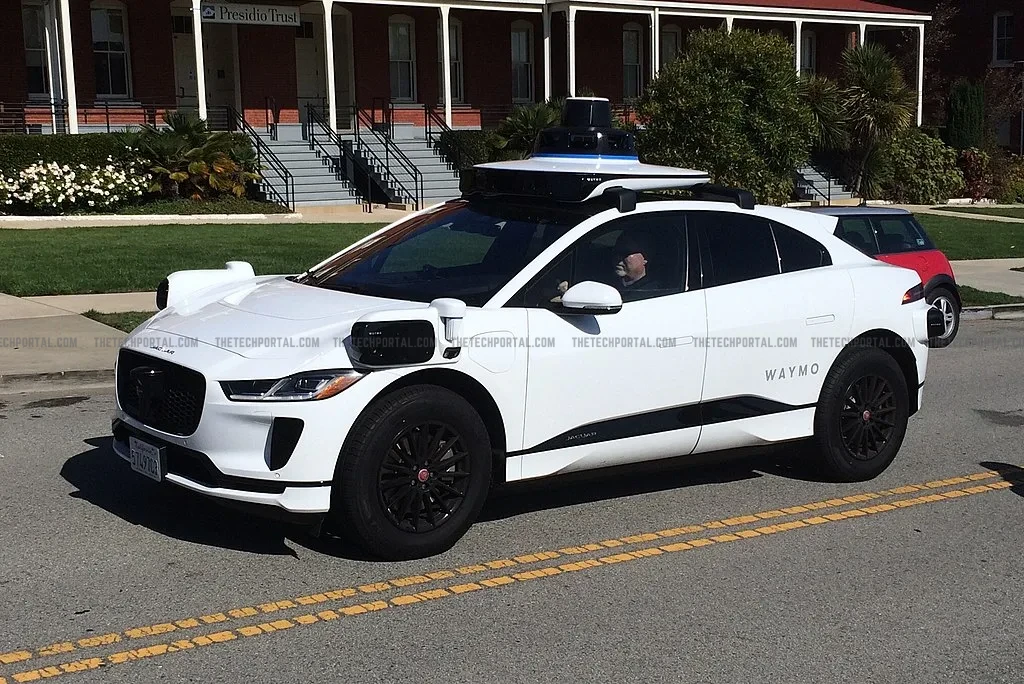

A widespread power outage in San Francisco on Saturday exposed a dependency between autonomous vehicles and urban infrastructure, after dozens of Waymo robotaxis were left stranded on city streets when traffic signals went dark. The incident forced Waymo to temporarily suspend its driverless ride-hailing service across the Bay Area. As of now, Waymo has resumed operations in the area.
To recap, the outage, caused by a fire at a Pacific Gas and Electric (PG&E) substation, knocked out electricity to roughly 130,000 homes and businesses at its peak, according to the utility. Traffic lights across large parts of San Francisco failed simultaneously, contributing to gridlock and disrupting public transit, including Muni services. San Francisco Mayor Daniel Lurie urged residents to stay off the roads unless travel was essential, as police officers were dispatched to manually manage key intersections. “9pm update: We have ambassadors, police officers, fire crews, and parking control officers out across the city. Civic Center and Powell Street BART stations are reopening, and Muni service is resuming though there are still impacts. Waymo has also paused service. If you’re able, please stay inside and take care of one another,” read his post on X.
As the blackout unfolded, social media platforms (as is the norm) filled with photos and videos showing Waymo’s autonomous SUVs stopped at intersections and along busy streets, often in clusters of multiple vehicles. Human drivers were seen maneuvering around the motionless robotaxis, while traffic backed up behind them. Waymo confirmed Saturday evening that it had suspended its ride-hailing operations across San Francisco, citing safety concerns and the need to give emergency crews unobstructed access. “We have temporarily suspended our ride-hailing services given the broad power outage,” spokesperson Suzanne Philion said in a statement. By Sunday evening, Waymo said it had resumed service, noting that the outage had caused “gridlock across San Francisco, with non-functioning traffic signals and transit disruptions.”
Waymo has not provided a detailed technical explanation for why so many vehicles became immobilized, though the company said its systems are designed to treat dark traffic signals as four-way stops. The scale of the outage, however, appears to have pushed those systems beyond normal operating conditions, causing vehicles to remain stationary for extended periods. Industry observers and former Waymo employees have pointed to the company’s reliance on remote human assistance in unusual situations as a possible factor.
When a vehicle encounters a complex or ambiguous scenario, it can request guidance from a remote operator who reviews live camera feeds, sensor data, and 3D maps before responding. Such assistance depends on reliable wireless connectivity, which may have been degraded as cell towers lost power or became overloaded when residents lost Wi-Fi access. Waymo has not disclosed how many remote assistance operators it has on duty at any given time, making it difficult to assess whether staffing constraints played a role.
This was not the first time Waymo vehicles have been seen stuck during infrastructure failures. Earlier this year, videos circulated online showing Waymo cars frozen at a malfunctioning traffic light, and a power outage in Austin, Texas previously produced similar scenes. In November, Waymo said it had passed a third-party audit of its remote assistance program conducted by German inspection firm TÜV Süd, which evaluated the system against industry practices. The San Francisco incident, however, suggests that large-scale outages may still pose challenges that are difficult to resolve quickly.
The Tech Portal is published by Blue Box Media Private Limited. Our investors have no influence over our reporting. Read our full Ownership and Funding Disclosure →

Soumyadeep is a Reporter at The Tech Portal, reporting on startups, AI and new tech. His focus is on covering startups developing cutting-edge technology across emerging sectors such as Deep-Tech, AI among others.