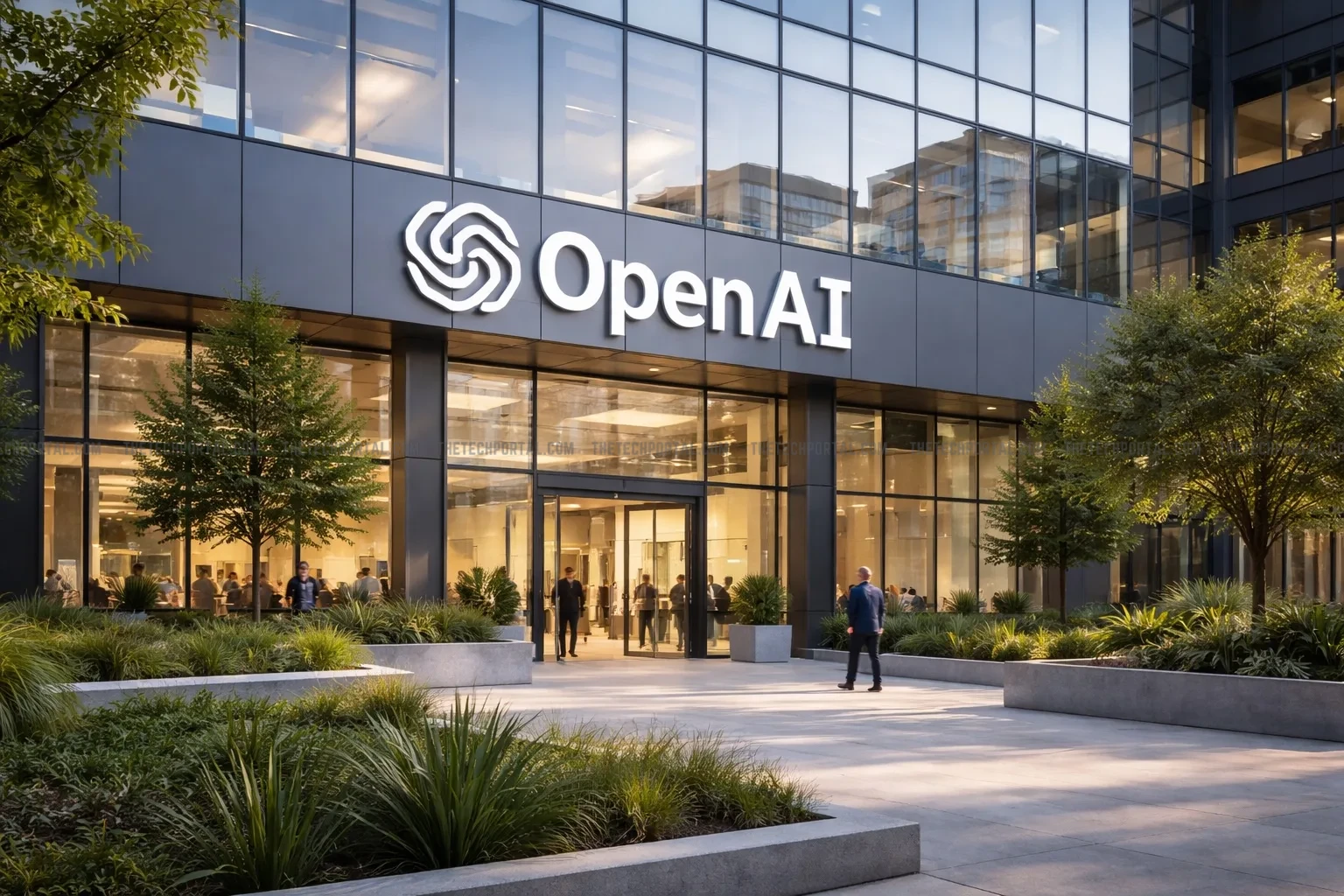
In what would be one of the largest private funding rounds in history, OpenAI today announced raising a staggering $122 billion in committed capital at a post-money valuation of $852 billion. This bolsters the company’s resources as it ramps up spending on chips, data centers, and talent to support its AI ambitions.
“OpenAI is becoming the core infrastructure for AI, making it possible for people around the world and businesses, big and small, to just build things. The broad consumer reach of ChatGPT creates a powerful distribution channel into the workplace, where demand is rapidly shifting from basic model access to intelligent systems that reshape how businesses operate. Developers build on and expand the platform by leveraging our APIs, and Codex is transforming how developers turn ideas into working software. Durable access to compute is the strategic advantage that compounds across the entire system: it advances research, improves products, expands access, and structurally lowers the cost of delivery at scale. Together, consumer adoption, enterprise deployment, developer usage, and compute form a reinforcing flywheel that is translating capability into economic impact,” the company announced in an official statement.
This latest fundraise included participation of several big tech firms — some of which are already investors in OpenAI — Amazon committed $50 billion (with $35 billion contingent on an IPO) while Nvidia and SoftBank each invested $30 billion. Additional backing arrived from prominent venture firms including Andreessen Horowitz, Abu Dhabi’s MGX, D.E. Shaw Ventures, TPG, and T. Rowe Price. In a first for OpenAI, more than $3 billion came from individual investors via bank channels. OpenAI CFO Sarah Friar described the round as surpassing even the largest IPOs in scale, providing “a lot of flexibility” to invest amid public market uncertainty.
The AI firm needs no introduction after having become all but a household name today. Since ChatGPT’s launch in late 2022 and the kickstart of the global AI race, OpenAI has grown into one of the fastest-expanding tech companies, now reporting more than 900 million weekly active users and over 50 million subscribers. The funding addresses massive capital needs for physical infrastructure. The company has signaled plans to spend over $1.4 trillion on computing resources in coming years to train and deploy advanced models. Currently, it competes with the likes of Anthropic, Microsoft, Google, and other players in the AI sector.The firm is also preparing for a potential IPO as early as this year. Friar described becoming “public-company capable” as essential “hygiene” and a “trust-building moment,” though the details of the IPO are yet to be publicly revealed.
OpenAI also reported generating $2 billion in monthly revenue, with enterprise sales comprising 40% of the total and projected to reach 50% by year-end. Last year’s full revenue stood at $13.1 billion. Growth has accelerated through new initiatives, including an advertising pilot in ChatGPT that reached $100 million in annualized revenue within six weeks — despite CEO Sam Altman once calling ads a “last resort.” It has also been streamlining its operations – the firm announced that it was discontinuing support for the Sora AI video generator, with the web and app experiences ending this month, while pivoting its focus to enterprise and agentic AI with the development of a “Super App” that unifies ChatGPT, the Codex coding tool, and the Atlas browser into a single system.
The Tech Portal is published by Blue Box Media Private Limited. Our investors have no influence over our reporting. Read our full Ownership and Funding Disclosure →

Soumyadeep is a Reporter at The Tech Portal, reporting on startups, AI and new tech. His focus is on covering startups developing cutting-edge technology across emerging sectors such as Deep-Tech, AI among others.