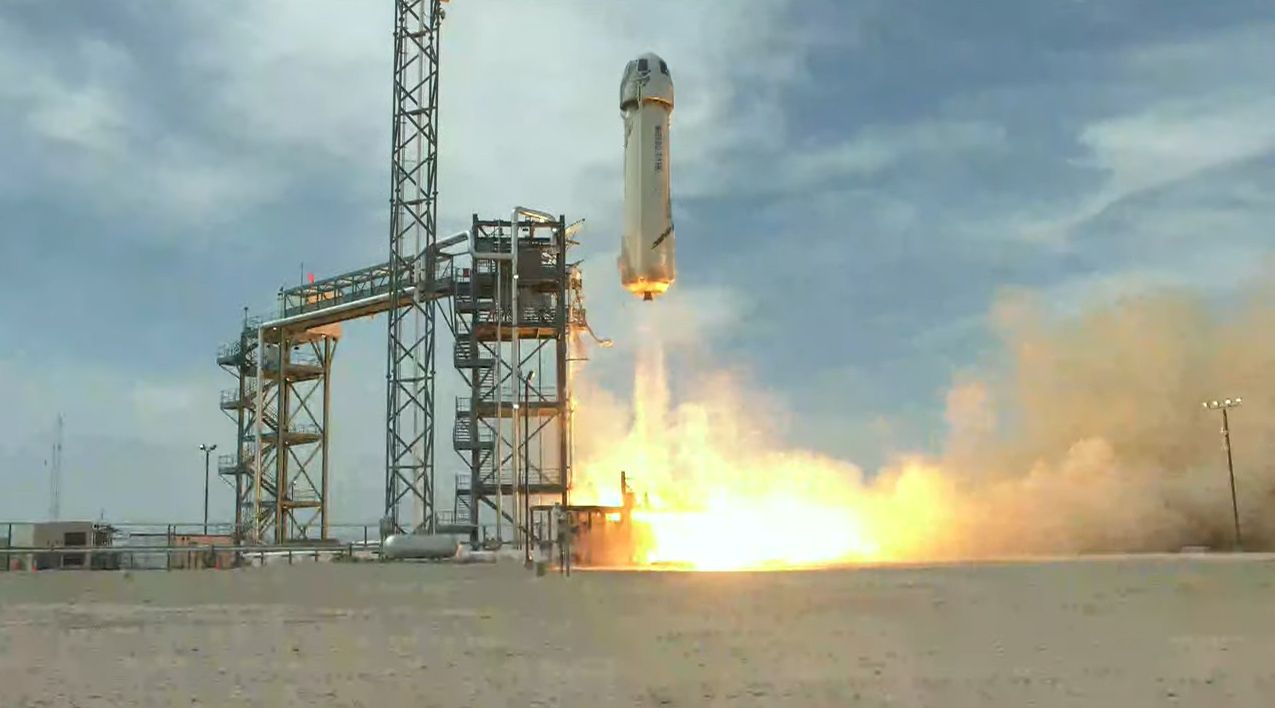

Blue Origin has decided to put its space tourism business on hold as it redirects its attention toward building lunar landing systems for NASA. The pause affects flights of the New Shepard rocket, the reusable suborbital vehicle that has been carrying paying customers and researchers to the edge of space since 2021. According to the company, the suspension will last for at least two years and is intended to free up engineering talent, funding, and operational focus for work tied to NASA’s Artemis missions.
New Shepard has played a major role in shaping Blue Origin’s public image. The reusable rocket-and-capsule system is built for brief suborbital flights lasting about ten minutes. Since its first crewed mission in July 2021, it has flown dozens of times and carried nearly 100 people, including paying customers, researchers, and well-known public figures.

However, now the pause in flights highlights Blue Origin’s increasing focus on lunar exploration. The company is a major partner in NASA’s Artemis program, which aims to return astronauts to the Moon and support a sustained human presence there. Blue Origin is developing its Blue Moon human landing system, designed to carry astronauts from lunar orbit to the surface and back. NASA awarded the company a multibillion-dollar contract for this work, putting it among a small group of firms building Moon landers.
Internally, the pause allows the company to reassign engineers, technicians, and program managers who previously supported New Shepard operations to lunar and orbital projects. Blue Origin has been expanding its overall portfolio beyond suborbital flight, including continued work on New Glenn, its heavy-lift orbital rocket intended to compete in the commercial launch market and support national security and deep-space missions. The company has positioned New Glenn as a critical piece of its long-term strategy, along with lunar landers and in-space infrastructure.
The decision comes as competition in the private space sector intensifies. NASA has increasingly relied on commercial partners to deliver major elements of its exploration architecture, and timelines for lunar missions are demanding. SpaceX is already developing a lunar version of its Starship vehicle for early Artemis landings, while Blue Origin is aiming to play a major role in subsequent missions and long-term lunar operations. Focusing resources on the Moon reflects both the scale of the opportunity and the pressure to deliver on high-stakes government contracts.
Most importantly, Blue Origin has not said whether space tourism flights will resume in their previous form once the pause ends, leaving open the possibility that suborbital tourism could become a smaller part of the company’s future.
The Tech Portal is published by Blue Box Media Private Limited. Our investors have no influence over our reporting. Read our full Ownership and Funding Disclosure →