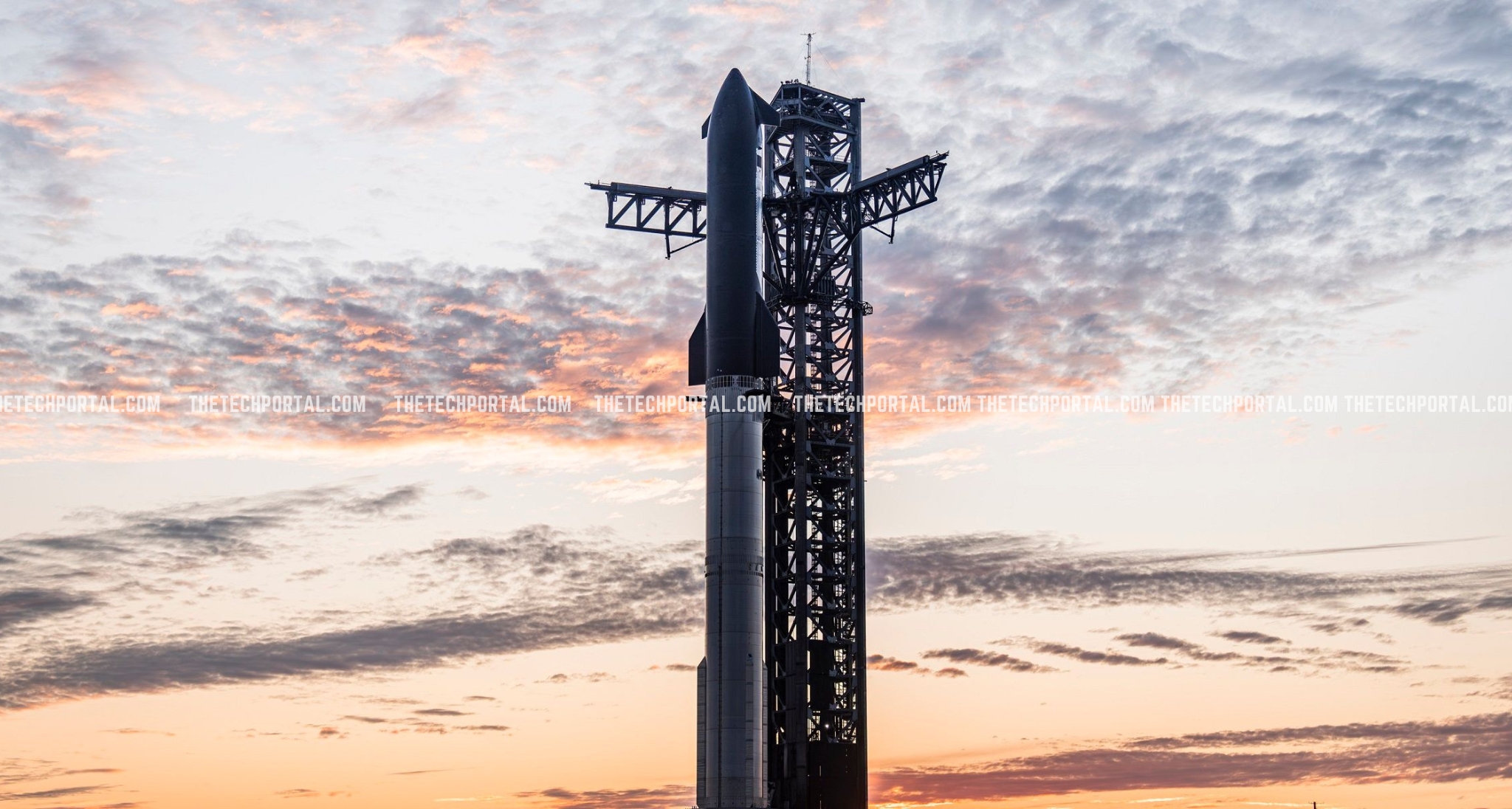

Elon Musk has shared a new timeline for SpaceX’s next Starship launch, shifting expectations from April to around May 2026. It appears the company needs more time for final testing and preparation ahead of the flight. In a post on X, he said the launch is now ‘4 to 6 weeks away.’ This suggests a launch window that is now in early to mid-May, and possibly later depending on readiness.
While the shift is relatively small, it clearly highlights the increasing complexity of SpaceX’s Starship program as it moves toward more advanced configurations. Notably, this will be the first Starship flight since October 2025 and will also mark the debut of the upgraded V3 version of the rocket. The timing is critical, as the test could happen just weeks before SpaceX’s potential mid-June 2026 IPO, which reportedly targets a $1.75 trillion valuation and a $75 billion raise.
The upcoming mission is expected to be the 12th integrated flight test of Starship, involving both the upper-stage spacecraft and the Super Heavy booster. Starship V3, which is set to debut on this flight, represents a major step forward in the rocket’s evolution. The new version is expected to feature structural refinements, increased propellant capacity, and more advanced Raptor engines designed for higher thrust and improved efficiency. There are also likely enhancements to the heat shield system, which has been a frequent challenge in previous tests.
The last Starship flight in October 2025 followed a series of increasingly ambitious tests, with partial successes like controlled descents, booster recovery attempts, and in-space engine relights. However, 2025 also saw several setbacks, including multiple explosions, a static-fire blast of Ship 36 in June, an engine-related failure during ascent in May, and a loss of control during reentry in March, along with issues like heat shield damage and guidance failures.
All this becomes even more significant as Starship remains central to long-term plans not only for SpaceX but also for NASA. The vehicle has been selected as the human landing system for the Artemis program, which aims to return astronauts to the Moon. For those missions to proceed, Starship must demonstrate a range of complex capabilities, including reliable reentry, precision landing, and eventually orbital refuelling. Delays in Starship development have already contributed to broader schedule shifts in lunar exploration plans, with crewed Moon landings now expected later in the decade.
The Tech Portal is published by Blue Box Media Private Limited. Our investors have no influence over our reporting. Read our full Ownership and Funding Disclosure →

Ashutosh is a Senior Writer at The Tech Portal, largely reporting on new tech, and intersection of technology and business. Ashutosh’s career spans across nearly a decade of technology writing across multiple platforms and languages.