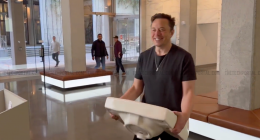

Elon Musk has hinted that a Starlink-branded smartphone could exist in the future, adding fresh momentum to ongoing discussions around satellite-based mobile connectivity. Responding to a user’s post on X, Musk suggested that if SpaceX ever builds its own phone, it would not be another iPhone or Android clone focused on specs and app ecosystems. Instead, he described it as a device built around direct satellite connectivity and high AI efficiency. The timing is notable, as Starlink is already working to deliver cellular-style service directly from low-Earth-orbit satellites to ordinary smartphones.
“It would be a very different device than current phones. Optimized purely for running max performance/watt neural nets,” Musk noted.

Musk did not confirm that a Starlink phone is in development, but his comments indicated a potential SpaceX strategy around how such a device could fit into its broader communications plans. He stressed efficiency over raw performance, pointing to AI systems designed to deliver high output per watt rather than focusing on faster chips, bigger screens, or camera upgrades. This clearly suggests a device built to handle advanced on-device AI while using minimal power, a design approach that fits the limits of satellite communication, where bandwidth, latency, and energy efficiency are far more critical than benchmark performance.
The whole scenario becomes even more significant as it ties directly into SpaceX’s ongoing rollout of direct-to-cell satellite technology. Unlike traditional satellite phones that depend on bulky antennas and specialized handsets, Starlink’s next-generation satellites are engineered to connect directly with standard LTE and 5G radios already built into many smartphones. Operating in low Earth orbit at around 500 to 600 kilometers above the planet, these spacecraft can deliver lower latency and more practical real-world mobile performance. The initial phase of the service is centered on basic capabilities like text messaging and emergency connectivity, with voice calls and limited data services expected to follow as satellite capacity increases and regulatory clearances are secured across more regions.
In parallel, trademark filings related to ‘Starlink Mobile’ and SpaceX’s growing focus on mobile spectrum have further fueled speculation that the company may eventually move beyond partnerships with existing carriers. While SpaceX has not announced plans to become a full consumer mobile operator, the technical foundation it is building would make that transition possible.
However, there are also significant technical and regulatory hurdles. For example, satellite connectivity places unique demands on antenna design, thermal management, and battery life, all of which must fit within the slim form factor consumers expect. Additionally, satellite-to-phone services rely on spectrum that is tightly regulated on a country-by-country basis, meaning global availability would require extensive coordination with national regulators and telecom authorities.
The Tech Portal is published by Blue Box Media Private Limited. Our investors have no influence over our reporting. Read our full Ownership and Funding Disclosure →