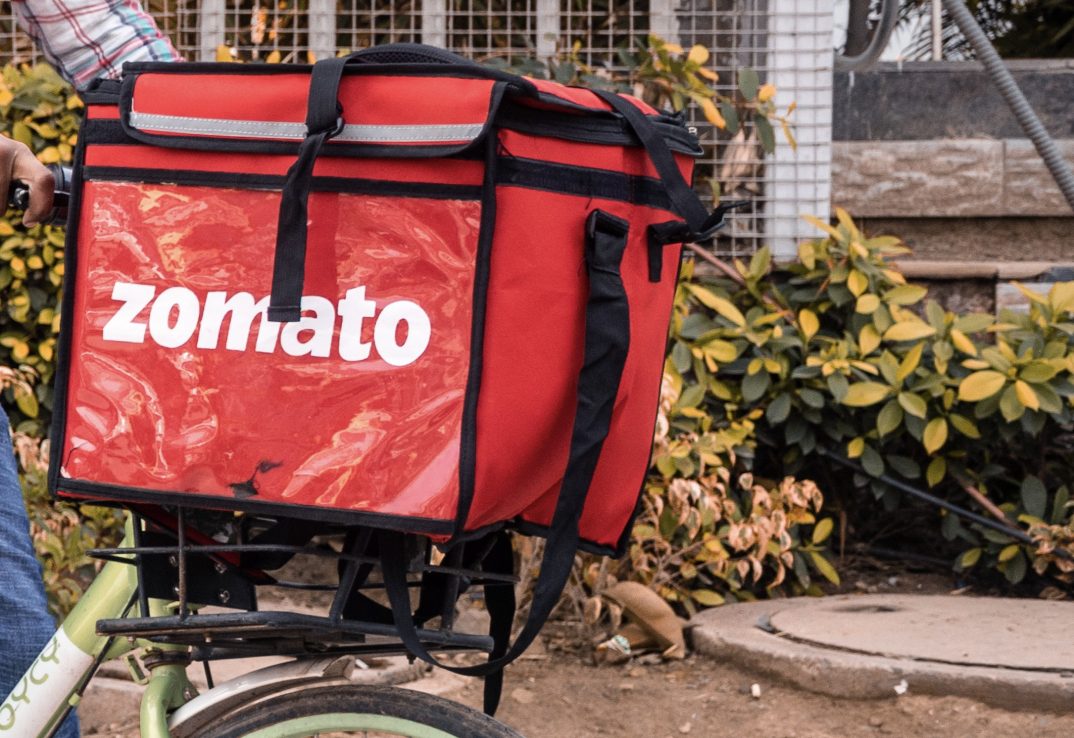

Zomato has quietly raised its platform fee to ₹14.90 per order across India, around a 19% increase from the earlier ₹12.50. The revised charge is already visible on the app and applies to all food delivery orders. Notably, this fee is added separately from delivery charges, restaurant packaging fees, and applicable GST. The latest hike is part of the food-delivery giant’s continued effort to improve revenue per order and strengthen its overall monetization.
Notably, when the fee was first introduced, it was as low as ₹2 per order, primarily positioned as a nominal operational charge. However, with gradual increases through 2024 and 2025 – rising to ₹10, then ₹12 and ₹12.50 – it has now reached almost ₹15, transforming into a meaningful revenue stream rather than a symbolic fee. The financial implications of such a hike are substantial at scale. As per Zomato’s previous shareholder update, the firm reported around 24.9 million average monthly transacting customers in its food delivery business. Therefore, even a ₹2-3 increase per order can translate into hundreds of crores in additional annual revenue.

The timing of the increase clearly shows ongoing cost pressures in the food delivery ecosystem. Logistics expenses, particularly fuel costs, have remained volatile, directly affecting last-mile delivery economics. Restaurants themselves have faced rising input costs, including cooking fuel like LPG, which indirectly impacts the entire supply chain. These pressures have pushed delivery platforms to recalibrate their pricing structures to maintain sustainable margins.
At the same time, the move also highlights a strategic shift in the industry toward profitability. Food delivery companies had long relied on heavy discounts and cash burn to acquire and retain customers. But now, as investor expectations have shifted toward sustainable earnings, companies are increasingly focusing on improving unit economics. And platform fees have emerged as a key lever in this transition, providing a stable source of income on every transaction.
Financially, Zomato’s parent Eternal continues to face significant cost pressures despite improving profitability. In Q3 FY26, the company reported revenue of ₹16,315 crore, but total expenditure was even higher at ₹16,493 crore, reflecting the impact of aggressive expansion. Costs surged across segments, with material costs (driven by Blinkit) at ₹9,801 crore, delivery expenses at ₹2,376 crore, and marketing spend rising to ₹937 crore. Although the company reported a net profit of ₹102 crore, its high costs show that maintaining profitability is still a challenge.
The Tech Portal is published by Blue Box Media Private Limited. Our investors have no influence over our reporting. Read our full Ownership and Funding Disclosure →